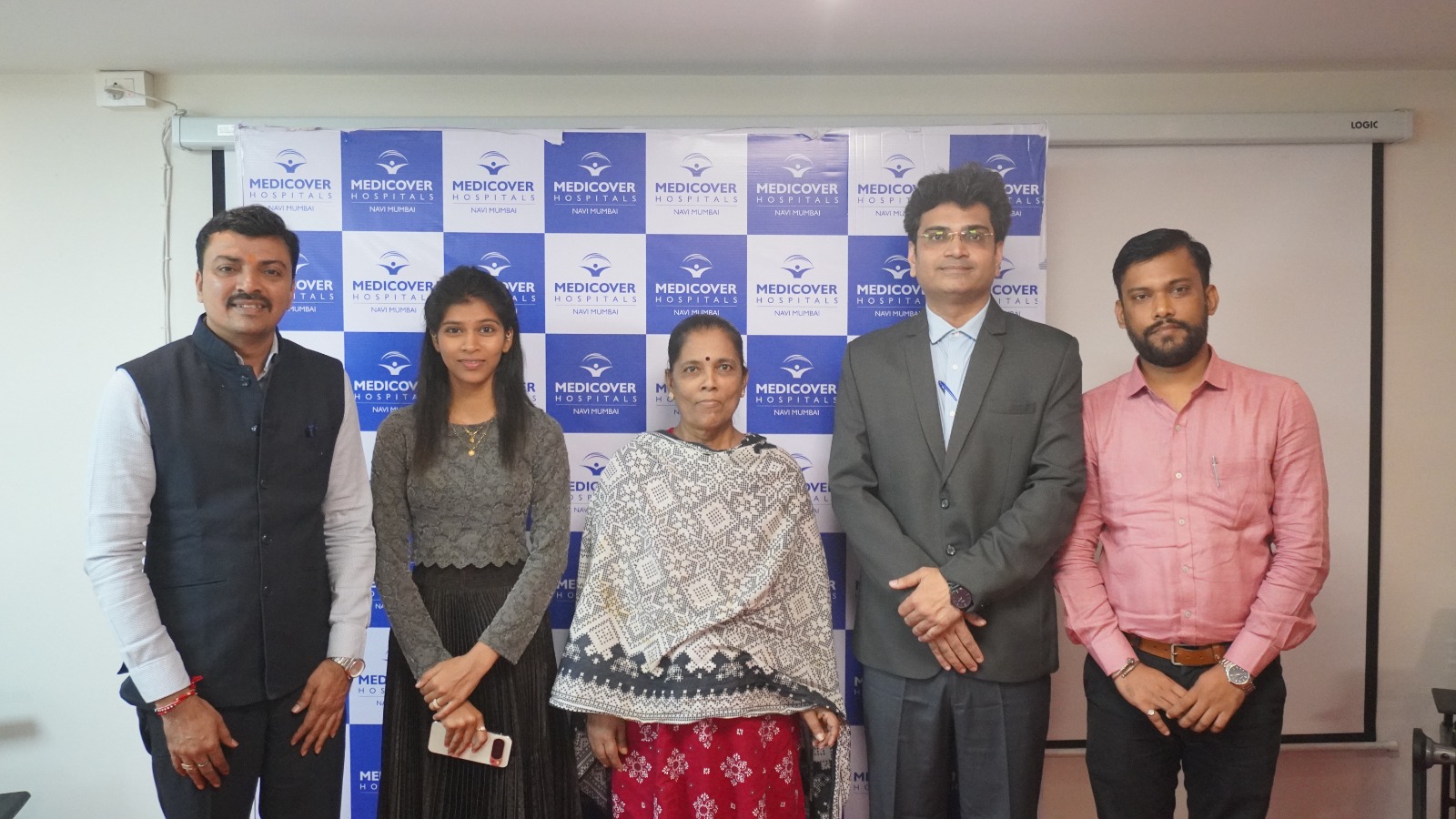
A 57-year-old woman from Alibaug, who struggled with breathlessness for nearly two years, recovers after a complex surgery involving a neck incision and opening of the breastbone.
NAVI MUMBAI: In a rare and highly complex surgical procedure, doctors at Medicover Hospitals, Navi Mumbai, have successfully removed an unusually large 18-cm thyroid mass located deep inside the chest, behind the heart, of a 57-year-old woman.
The surgery, which lasted approximately 10 hours, involved the removal of a rare condition known as a posterior mediastinal thyrothymic rest (TTR). The mass was positioned close to major blood vessels, the heart and the airway, making the procedure particularly challenging.
The patient, Mrs. Dahita Jaitu, a homemaker from Alibaug, had been experiencing breathing difficulties and weakness while walking for nearly two years. Her symptoms gradually began interfering with her everyday activities, prompting her to seek further medical evaluation.
An Unusual Thyroid Growth Deep Inside the Chest
The thyroid gland is normally located in the front of the neck. However, during foetal development, small deposits of thyroid tissue can occasionally remain along its developmental pathway between the neck and chest.
This condition, known as a thyrothymic rest, involves thyroid tissue outside the normal thyroid gland. Although such tissue is generally small, it can occasionally enlarge significantly.
In this patient’s case, the mass had grown to approximately 18 cm and extended deep behind the heart and its protective covering, the pericardium. It also extended below the point where the windpipe divides into the two main airways and was situated between major blood vessels, including the aorta and pulmonary artery.
Its unusual location and massive size meant that even accessing the tumour safely posed a significant surgical challenge.

Breathlessness for Two Years Led to Further Investigation
Mrs. Jaitu had experienced progressive breathlessness and weakness, particularly while walking. Despite consulting several doctors over the preceding year, her symptoms continued.
She eventually approached Medicover Hospitals, Navi Mumbai, after learning about Surgical Oncologist Dr. Rahulkumar N. Chavan through a local doctor in Alibaug.
A detailed clinical evaluation and CT scan revealed the unusually large thyroid mass inside her chest.
Dr. Rahulkumar N. Chavan, Surgical Oncologist, said, “When the patient arrived, she had neck swelling and facial fullness, along with a history of breathlessness. A CT scan revealed an abnormally large thyroid mass located deep inside the chest, behind the heart.”
He added that the approximately 18-cm thyrothymic rest was exceptionally unusual because of its size, depth and proximity to critical structures.
Based on available literature and reports, the surgical team believes this may be the largest thyrothymic rest reported behind the heart so far, although this claim requires confirmation through published medical records.
A 10-Hour Surgery Requiring Exceptional Precision
Considering the tumour’s location and its proximity to vital blood vessels, doctors determined that removing it through a neck incision alone would not be safe.
- The surgical team therefore adopted a combined surgical approach involving:
- A transverse neck incision to access the thyroid region.
- A median sternotomy, involving opening the breastbone to access the chest.
- Careful dissection and mobilisation of major blood vessels.
- Protection of the innominate vein and careful mobilisation of the aortic arch.
- Gradual mobilisation and removal of the entire mass through the neck.
The surgery was led by Dr. Rahulkumar N. Chavan, with Dr. Vidisha, Anaesthetist, supported by the ICU team and operating theatre staff.
Explaining the complexity, Dr. Chavan said that the tumour was firmly attached near the thoracic inlet, while the innominate vein and aortic arch presented major challenges because of their close proximity.
“The most important part of such a procedure is not just removing the tumour, but doing so without causing injury to the surrounding vessels, airway, nerves or other vital structures,” he explained.
Patient Recovers Without Major Postoperative Complications
Despite the complexity of the operation, the patient’s postoperative recovery was reported to be uneventful.
According to the hospital, she did not develop hypocalcaemia, nerve injury or thoracic complications following surgery.
She was discharged seven days after the procedure.
Expressing relief and gratitude, Mrs. Dahita Jaitu said, “We are thankful for the care and support given throughout the treatment and relieved to see her recovering well.”
Importance of Advanced Surgical Care and Multidisciplinary Teams
Mr. Neeraj Lal, Regional Director, Maharashtra and Karnataka Region, Medicover Hospitals, said the case highlighted the importance of experienced surgical teams, advanced infrastructure and coordinated medical support in managing rare and technically challenging conditions.
Mr. Sandip Joshi, Centre Head, Medicover Hospitals, Navi Mumbai, added that modern surgical infrastructure, advanced technology and multidisciplinary expertise play an important role in supporting doctors during complex procedures.
What Does This Case Teach Us About Persistent Breathlessness?
Breathlessness while walking, unexplained weakness and progressive breathing difficulties should not be ignored, particularly when these symptoms persist or gradually worsen.
Although breathlessness can occur due to several common medical conditions, including respiratory and cardiac disorders, occasionally structural abnormalities or masses inside the chest may also contribute.
Early medical evaluation and appropriate imaging investigations can help identify the underlying cause and guide timely treatment.
This rare case highlights how an unusual medical condition, which remained undiagnosed for a prolonged period, can eventually be identified through detailed investigation and managed through specialised surgical care.
Aarogyam Times | Health First. People First.