
A global climate-health scorecard flags gaps in India’s climate commitments, raising questions about clean air, climate-resilient healthcare and protection for vulnerable communities.
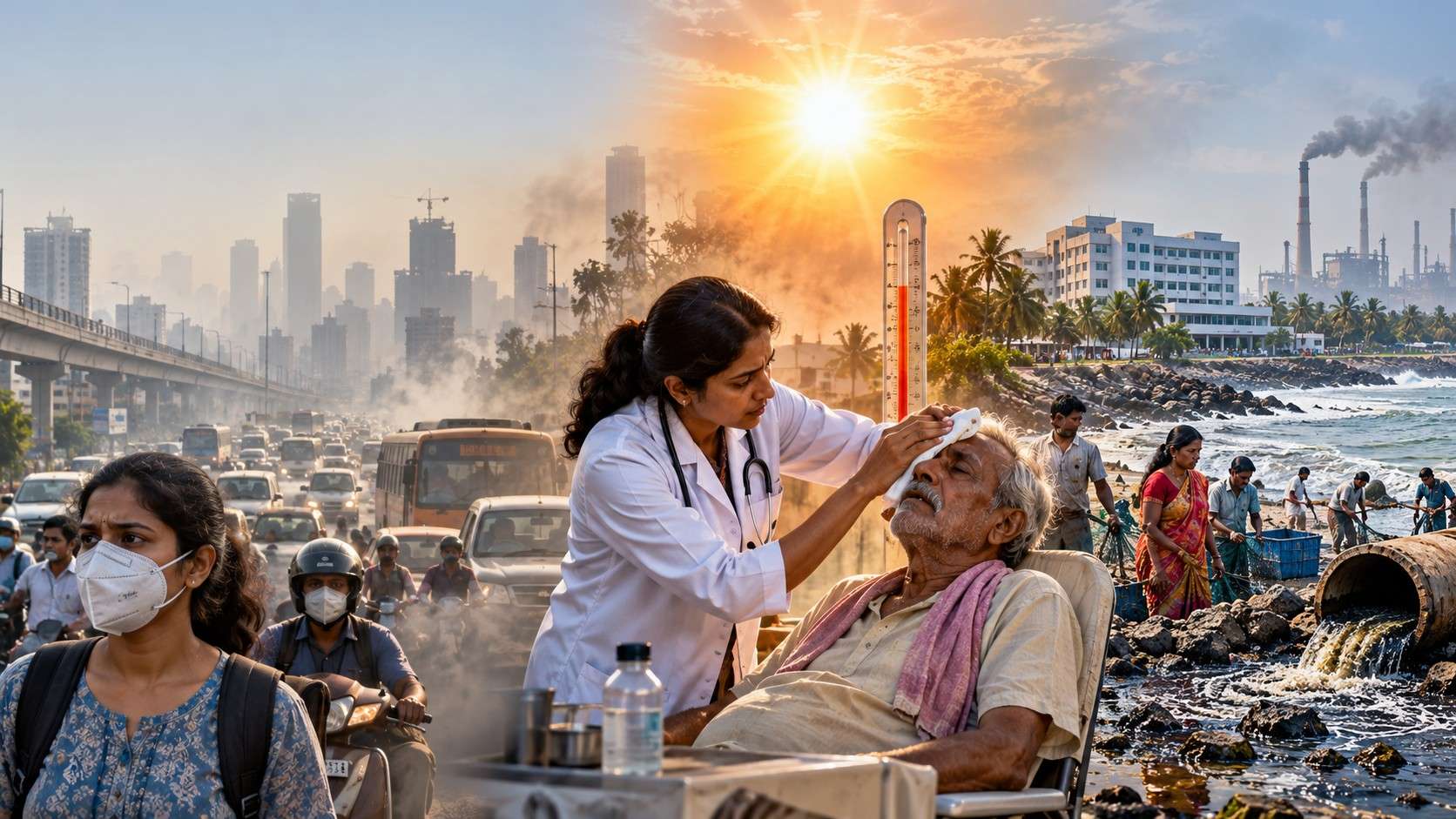
NEW DELHI, October 21, 2026: Climate change is not only an environmental challenge—it is a growing public health concern that affects the air people breathe, the water they drink, the food they eat and their ability to stay safe during extreme heat.
A new global assessment has raised concerns about how effectively India’s national climate commitments address these health risks. The 2026 Healthy Nationally Determined Contribution (NDC) Scorecard, released by the Global Climate and Health Alliance (GCHA), gave India just 2 out of 32 points for integrating health into its climate action plan, placing it among the lowest-scoring countries assessed.
The scorecard evaluated 117 national climate plans representing 132 countries, examining how governments address health impacts, air pollution, healthcare preparedness, the health benefits of climate action, financing and implementation. <Cite refs={[“turn497268search0″,”turn497268search1”]}/>
For millions of Indians already facing polluted air, rising temperatures and climate-related disasters, the findings highlight the importance of placing public health at the centre of climate policy.
Air Pollution: A Major Public Health Concern
One of the key concerns highlighted in the reporting on the scorecard is the absence of an explicit reference to air pollution in India’s latest national climate commitment submitted under the Paris Agreement.
Air pollution is associated with serious health risks, including respiratory and cardiovascular diseases. Exposure to harmful pollutants can aggravate asthma and other existing conditions, while prolonged exposure increases the risk of premature death.
Children, older adults, people with chronic illnesses and outdoor workers can be particularly vulnerable to poor air quality.
The scorecard assesses whether national climate plans identify air pollutants and establish measures to address them. India received no points in this category, indicating a gap in how air pollution is reflected in its submitted climate commitment. <Cite refs={[“turn497268search1″,”turn497268search0”]}/>
The omission matters because policies that reduce emissions from transport, power generation, industry and other sources can also deliver important public health benefits when they reduce exposure to harmful air pollutants.
Rising Heat and Climate-Related Illnesses
Extreme heat is another growing concern for public health.
High temperatures can cause dehydration, heat exhaustion and heatstroke, while increasing the strain on the heart and kidneys. People working outdoors, those living in poorly ventilated homes and communities with limited access to cooling and drinking water can face greater risks.
Climate-related changes can also affect food and water security, increase pressure on health services and contribute to conditions favourable to some infectious diseases.
The GCHA scorecard found that India’s climate commitment did not adequately quantify the health impacts of climate change. This points to a need for clearer health indicators and stronger integration of climate risks into public health planning. <Cite refs={[“turn497268search0″,”turn497268search1”]}/>
Can Hospitals Cope With a Changing Climate?
Climate-related disasters can disrupt essential health services just when communities need them most.
Floods, cyclones and heatwaves can damage healthcare infrastructure, interrupt electricity and water supplies, affect medicine storage and make it harder for patients to reach hospitals.
Climate-resilient healthcare requires more than emergency response. It also involves preparing facilities for extreme weather, strengthening disease surveillance, developing early-warning systems and ensuring continuity of essential medical services.
Although the scorecard awarded India one point for health-sector action, the overall assessment highlights the need for climate planning to demonstrate more clearly how health systems will prepare for and respond to climate-related risks. <Cite refs={[“turn497268search0″,”turn497268search1”]}/>
Climate Change Could Also Increase Coastal Pollution Risks
A separate study reported by Eco-Business has raised concerns about how climate change could worsen toxic pollution from mining waste along coastlines.
Mining waste, often stored in large tailings facilities, can contain heavy metals and other potentially harmful substances. If waste escapes storage facilities or is carried into surrounding waterways, it can contaminate land and water and damage marine ecosystems.
The analysis reported that mining operations and waste-storage facilities pose potential pollution risks along nearly 293,000 kilometres of coastline worldwide. Under severe climate-change scenarios, changing weather patterns and rising temperatures could increase these risks in some regions. <Cite refs={[“turn497268view4″,”turn499741view1”]}/>
For coastal communities, environmental contamination can have implications for drinking-water safety, fisheries, livelihoods and food security. However, the study’s global findings should not be interpreted as evidence that every Indian coastal region faces the same level of risk.
The findings reinforce the importance of monitoring industrial waste, protecting water sources and preparing for climate-related hazards.
What Needs to Change?
The scorecard points to an opportunity to make India’s climate commitments more directly relevant to people’s health.
A stronger health-centred approach could include:
- Cleaner air: Explicit targets and measures to reduce harmful air pollution alongside greenhouse gas emissions.
- Heat-health preparedness: Better early-warning systems, heat action plans, cooling facilities and protection for outdoor workers.
- Climate-ready hospitals: Reliable electricity and water, disaster preparedness and resilient healthcare infrastructure.
- Protection of vulnerable communities: Targeted measures for children, older adults, people with chronic illnesses and low-income households.
- Health-focused monitoring: Measurable indicators to track climate-related illness, health benefits and progress in protecting communities.
- Sustainable funding: Clear financial plans to support climate adaptation and strengthen public health services.
These priorities would help connect national climate commitments with the health needs of communities on the ground.
A Low Score Does Not Tell the Whole Story
The scorecard evaluates how health is incorporated into a country’s submitted national climate commitment. It is not a comprehensive assessment of every climate or public health programme operating in India.
India has existing initiatives addressing climate-sensitive health risks, including the National Programme on Climate Change and Human Health. The government has also undertaken measures to address air pollution and strengthen preparedness for related illnesses. <Cite refs={[“turn497268search3″,”turn497268search0”]}/>
Nevertheless, the findings suggest that health needs to be more explicitly and consistently connected with national climate targets, implementation plans and monitoring.
The challenge is not simply to recognise that climate change affects health, but to ensure that policies translate that recognition into measurable protection for people.
The Aarogyam Times Takeaway
Climate action should ultimately be measured not only by emissions reduced, but also by the lives protected and the health benefits delivered.
Cleaner air, safer water, protection from extreme heat and resilient hospitals are essential components of a healthier future. India’s low score in the 2026 climate-health assessment highlights the need to connect environmental policy more directly with public health priorities.
For citizens, climate action is health protection. For policymakers, the priority is to turn that connection into clear targets, effective implementation and measurable improvements in people’s lives.